
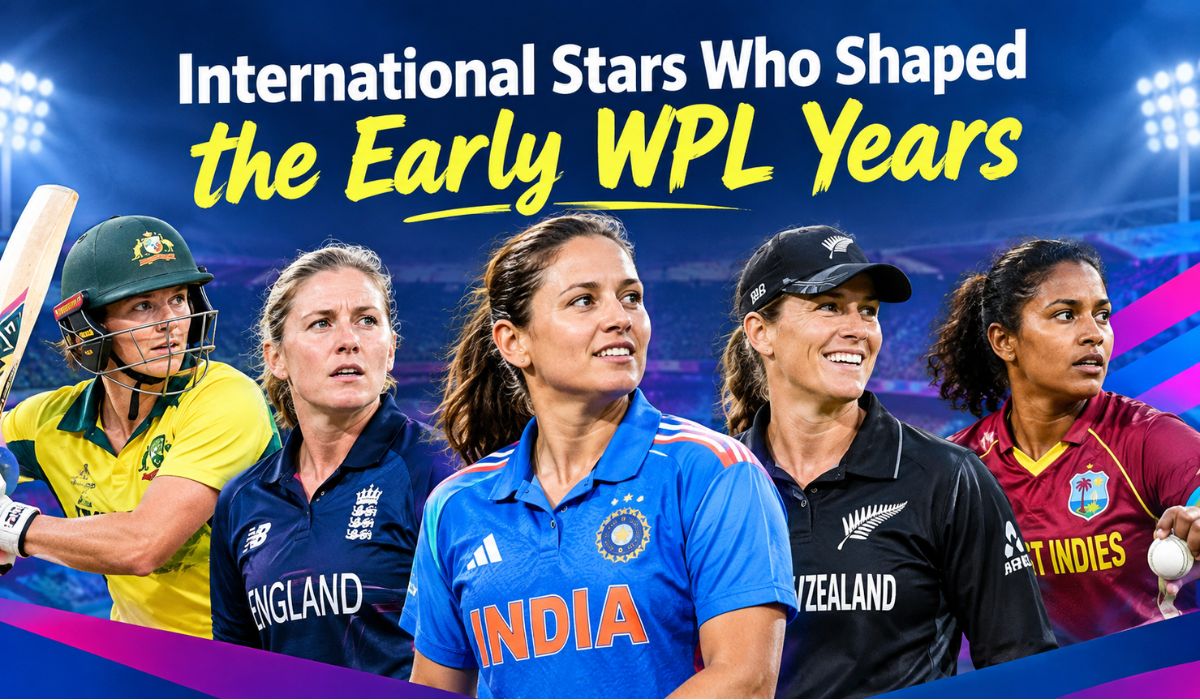
The Women’s Premier League was created in India, but its identity was international from the beginning. When the tournament opened its doors in 2023, some of the world’s leading women’s cricketers joined Indian stars to create a competition unlike anything previously seen in the country. Players from Australia, England, New Zealand, South Africa and other cricketing nations brought experience, tactical knowledge and different styles of T20 cricket into the new league.
The presence of these international players helped the WPL establish its standard during its formative seasons. They were not simply overseas names added to franchise squads. Many became important performers, leaders, mentors and match-winners. Their influence could be seen in championship campaigns, individual awards, memorable innings and the development of young Indian players.
The inaugural WPL itself featured international stars including Alyssa Healy, Deandra Dottin, Ellyse Perry, Sophie Ecclestone and Sophie Devine. The BCCI’s original auction list contained 163 overseas players, with 13 of them placed in the highest ₹50 lakh reserve-price category.
As the league moved through its first four seasons, several overseas players became closely connected with its history.
read more –How the Women’s Premier League Changed Indian Cricket
Ellyse Perry and the Arrival of Global Experience
Ellyse Perry was one of the most recognizable international names associated with the inaugural WPL.
The Australian all-rounder joined Royal Challengers Bengaluru and quickly became an important part of the franchise’s identity. Her international career had already included success across formats, and her presence gave the newly formed league an immediate connection with the established world of women’s cricket.
Perry’s importance extended beyond her individual performances. Young Indian players could train and play alongside a cricketer with extensive experience in international tournaments and professional T20 competitions.
Her continued presence also demonstrated how international stars could become long-term members of WPL franchises rather than appearing for only one season. RCB retained Perry ahead of the 2026 season, alongside Smriti Mandhana, Richa Ghosh and Shreyanka Patil.
Nat Sciver-Brunt and Consistency at the Top
Nat Sciver-Brunt became one of the most influential overseas players in the early WPL years.
Mumbai Indians signed the England all-rounder during the inaugural auction, where she was among the premium international names. Her ability to contribute with both bat and ball made her particularly valuable in a competition where squad balance is critical.
Sciver-Brunt’s WPL career has included several major performances. In 2025, she scored five half-centuries during the season, the most by a player in a single WPL campaign at that point. She then scored 77 from 41 balls in Mumbai’s 2025 Eliminator against Gujarat Giants as Mumbai made 213/4, the highest total in a WPL playoff match at the time.
She reached another historic milestone in 2026.
Against RCB, Sciver-Brunt scored an unbeaten 100 from 57 deliveries, including 16 fours and a six. It was the first century in WPL history. Mumbai finished on 199/4 and won the match by 15 runs.
Her progression illustrates how an international star helped define the league’s batting history while remaining a central part of Mumbai’s long-term structure.
Sophie Ecclestone and Elite Spin Bowling
England’s Sophie Ecclestone brought a different dimension to the WPL.
The left-arm spinner arrived with an established reputation as one of the leading white-ball bowlers in international cricket. Her inclusion immediately strengthened the tournament’s bowling quality.
For Indian batters, facing Ecclestone provided experience against one of the world’s most difficult spin options.
Her influence was also important from a tactical perspective. Modern T20 cricket increasingly relies on specialist bowlers who can operate during particular phases, and Ecclestone represented that specialist approach.
The WPL gave her another major franchise environment in which to apply her skills while allowing domestic players to learn from her preparation and tactical methods.
Sophie Devine and the All-Rounder Model
New Zealand’s Sophie Devine was another international player who helped establish the WPL’s high standard.
Devine entered the league as an experienced international captain and powerful all-rounder. Her ability to open the batting, contribute with the ball and provide leadership made her especially valuable.
Her importance became even more visible during the 2026 season.
Devine finished the tournament with 17 wickets, winning the Purple Cap, and was also named the Most Valuable Player of the season. The official WPL statistics list her as the 2026 MVP after nine matches.
Her 2026 campaign demonstrated that international players could remain central to the league several seasons after its launch.
Hayley Matthews and Mumbai Indians’ Success
West Indies all-rounder Hayley Matthews became one of the most important overseas players in Mumbai Indians’ WPL story.
Her combination of aggressive batting and off-spin bowling gave Mumbai flexibility across different match situations.
Matthews played a major role in Mumbai’s 2025 campaign. In the Eliminator against Gujarat Giants, she scored 77 from 50 balls and then took 3/31 as Mumbai won by 47 runs. She was named Player of the Match for her all-round performance.
That performance captured the value of international all-rounders in the WPL.
A player capable of influencing both innings can change a match without requiring a franchise to use an additional specialist.
Amelia Kerr and the Value of Versatility
New Zealand’s Amelia Kerr became another major figure in Mumbai Indians’ early WPL years.
Kerr’s leg-spin and batting ability allowed Mumbai to construct flexible playing XIs.
Her value became particularly visible during the 2025 season, when she finished as the Purple Cap winner. In the 2025 Eliminator, she contributed two wickets for 28 runs against Gujarat Giants.
Kerr’s importance continued into 2026, when Mumbai retained her as part of its squad.
Her career illustrates an important feature of the WPL: international players can develop long-term relationships with franchises and become part of a team’s evolving identity.
Ashleigh Gardner and the Australian Influence
Australian all-rounder Ashleigh Gardner was one of the marquee international names of the inaugural WPL auction.
Gujarat Giants secured Gardner, who entered the league with extensive experience in international cricket and T20 competitions.
Gardner brought power hitting, off-spin and fielding ability to the franchise. Her presence also represented the strong connection between the WPL and Australia’s highly developed women’s cricket system.
She remained a key part of Gujarat’s setup in later seasons. Ahead of 2026, the Giants retained Gardner and Beth Mooney as their two overseas players.
In 2026, Gardner also continued to contribute with both bat and ball. Against Mumbai Indians late in the season, she scored 46 from 28 balls and took the decisive wicket of Harmanpreet Kaur during Gujarat’s 11-run victory.
Beth Mooney and Leadership at Gujarat Giants
Beth Mooney was another Australian star who became central to Gujarat Giants.
Her experience as a wicketkeeper-batter gave the franchise several options. She could contribute at the top of the order while also providing leadership and wicketkeeping expertise.
Mooney was one of the high-profile international players selected during the inaugural WPL auction and remained part of Gujarat’s plans several seasons later.
Her retention alongside Gardner for 2026 demonstrated how franchises increasingly valued continuity after the league’s initial squad-building period.
Alyssa Healy and the Importance of Wicketkeeper-Batters
Alyssa Healy was among the major international names connected with the inaugural WPL.
The Australian wicketkeeper-batter joined UP Warriorz and brought years of international experience to the new competition.
Healy represented another important category of overseas talent: players who could combine leadership, wicketkeeping and aggressive top-order batting.
Her presence helped raise the standard expected from wicketkeeper-batters in the league.
The WPL provided another environment where Indian players could observe how an elite international wicketkeeper prepared, communicated and approached T20 batting.
Deandra Dottin and Power Cricket
West Indies star Deandra Dottin was also part of the international group that helped shape the inaugural WPL.
Known for her powerful batting and fast bowling, Dottin represented the explosive style associated with Caribbean T20 cricket.
Her presence broadened the range of playing styles represented in the competition.
The WPL was not simply importing players from one cricket culture. It was bringing together different approaches from across the global game.
Annabel Sutherland and the Next Wave
Australia’s Annabel Sutherland represents a younger generation of international players who became increasingly important as the WPL developed.
Delhi Capitals retained Sutherland ahead of the 2026 season, alongside Marizanne Kapp and other established players.
Sutherland’s ability to contribute as an all-rounder makes her an example of how franchises began combining established stars with players who could become long-term assets.
Her involvement also shows that the international influence of the WPL did not end with its inaugural season.
Marizanne Kapp and the South African Connection
South Africa’s Marizanne Kapp was another influential overseas all-rounder in the early WPL years.
Her experience, bowling variety and lower-order batting made her a valuable member of Delhi Capitals.
Kapp also brought another cricketing perspective into the competition.
The presence of South African players helped ensure that the WPL’s international character extended beyond the traditional major women’s cricket nations.
Her continued retention by Delhi for 2026 showed the value franchises placed on experience and proven all-round ability.
International Players Changed the Dressing Room
One of the biggest effects of international stars was not visible in the scorecard.
It happened inside franchise dressing rooms.
Young Indian players could spend several weeks working alongside experienced cricketers from different countries. They could observe training habits, preparation methods, tactical discussions and approaches to pressure.
A young bowler could discuss variations with an international spinner.
A batter could learn about powerplay preparation from an experienced opener.
A developing all-rounder could see how an established player managed workloads across two disciplines.
This exchange of knowledge became one of the WPL’s most valuable characteristics.
The WPL Created a Global Cricket Environment
The inaugural WPL featured 163 overseas players on its auction list, including players from associate nations.
Although only a limited number could eventually receive contracts, the breadth of the player pool demonstrated the international interest surrounding the competition.
The five original franchises were therefore building teams with a mixture of Indian domestic talent and international experience.
This combination helped make the league competitive from its first season.
International Stars Raised the Tactical Standard
International players also influenced the tactical development of the competition.
Different cricketing countries have developed different approaches to T20 cricket.
Australian players often brought experience from a highly developed domestic and international women’s system.
English players contributed experience from their own professional structures.
New Zealand, South Africa and West Indies players added their own tactical approaches.
The combination created a diverse cricketing environment.
Indian players were able to experience these approaches without leaving the country.
The Importance of International All-Rounders
One recurring theme among the most influential overseas players is versatility.
Sciver-Brunt, Matthews, Gardner, Devine, Kerr, Sutherland and Kapp can all contribute in more than one discipline.
This has made them especially valuable in the WPL.
Franchises have limited squad positions and overseas-player slots. An all-rounder can provide flexibility that a single-discipline specialist cannot.
The success of these players helped demonstrate the importance of multi-skilled cricketers in modern women’s T20 cricket.
International Stars and Championship Campaigns
The contribution of overseas players can also be seen in the WPL’s championship history.
Mumbai Indians won the inaugural title in 2023 and later won again in 2025. RCB won the championship in 2024 and 2026.
International players have been important components of these successful teams.
Mumbai’s championship squads featured major overseas contributors, while RCB’s development included players such as Ellyse Perry.
The championship record therefore provides another indication of how closely international talent has been integrated into the league.
The Early WPL Was a Learning Environment
The first seasons of a new tournament are about more than winning trophies.
Players, coaches and franchises are learning what works.
International stars brought knowledge from other competitions and national teams.
Indian players brought familiarity with local conditions and domestic cricket.
The combination created a learning environment in which both groups could influence each other.
That exchange helped the WPL establish its own style rather than simply copying another league.
International Experience Helped Young Indian Players
Perhaps the most lasting contribution of overseas stars has been their influence on younger Indian players.
A young cricketer might not get the same opportunity to interact closely with an international star through ordinary domestic cricket.
The WPL changed that.
International players became teammates rather than distant opponents.
This made knowledge transfer more natural and practical.
Young players could learn through everyday training and match preparation instead of only watching international matches on television.
The WPL’s International Identity Has Continued
The international influence established in 2023 did not disappear as the league matured.
The 2026 retention list included seven overseas players across the five franchises, including Sciver-Brunt, Matthews, Gardner, Mooney, Sutherland, Kapp and Perry.
That continuity is important.
It shows that international stars have become part of the league’s long-term structure rather than being used only to generate attention during its launch.
New International Stars Continue to Arrive
While the first generation of WPL stars helped establish the league, newer international players continue to enter the competition.
The 2026 season included a broad collection of international talent, and Sophie Devine’s 17 wickets demonstrated that experienced overseas players could still dominate major statistical categories.
The evolution suggests that the WPL can provide opportunities for several generations of international players.
Why Their Legacy Matters
The legacy of international players cannot be measured only through runs and wickets.
Their impact includes the standards they established, the knowledge they shared and the professional habits they demonstrated.
They helped Indian players understand different tactical approaches.
They helped franchises build stronger professional environments.
They also gave the WPL an immediate connection with the global women’s game.
Looking Beyond the Early Years
The WPL is now moving beyond its formative stage.
Teams have established cores, franchises have accumulated several seasons of data and young Indian players are increasingly familiar with the demands of professional T20 cricket.
Yet the influence of the early international stars remains visible.
Players such as Perry, Sciver-Brunt, Ecclestone, Devine, Matthews, Kerr, Gardner, Mooney, Healy and Kapp helped establish the competitive standard against which later generations would be measured.
Their involvement also helped demonstrate that the WPL could become a genuine international destination for women’s cricketers.
Conclusion
The early years of the Women’s Premier League were shaped by a remarkable collection of international stars.
Ellyse Perry brought experience and leadership to RCB. Nat Sciver-Brunt became one of the league’s most consistent all-round performers and scored the first WPL century in 2026. Sophie Ecclestone represented elite spin bowling, while Sophie Devine’s 2026 campaign showed the continuing importance of international all-rounders. Hayley Matthews, Amelia Kerr, Ashleigh Gardner, Beth Mooney, Alyssa Healy, Deandra Dottin, Annabel Sutherland and Marizanne Kapp added further depth to the competition.
The BCCI deliberately built the inaugural tournament around a mixture of Indian stars and global names, and the original auction included 163 overseas players on the final list.
Their influence was therefore about more than individual performances.
They helped establish professional standards, introduced different cricketing philosophies and created opportunities for young Indian players to learn from experienced international teammates.
The WPL’s early history is ultimately a story of collaboration between domestic and international talent. Indian players gave the competition its local foundation, while international stars helped connect it to the wider world of women’s cricket.
As the league continues to develop, new players will create their own records and rivalries. But the international stars of the early WPL years will remain an important part of the tournament’s foundation and its transformation into one of the major competitions in women’s T20 cricket.