

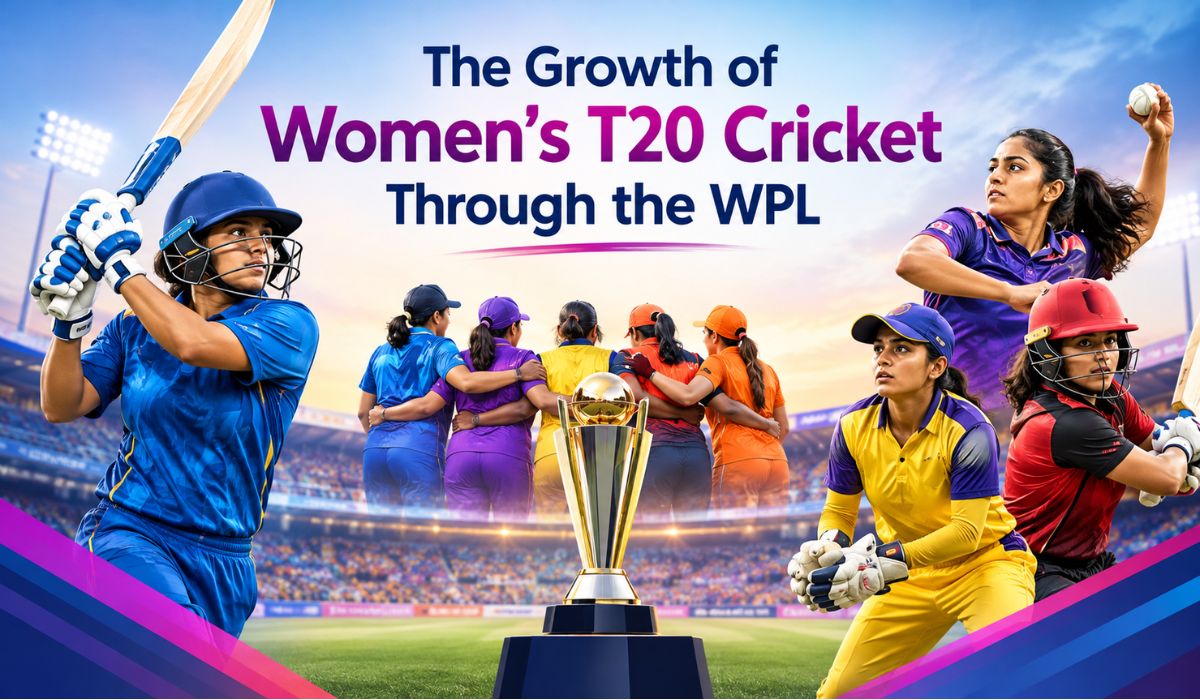
Women’s T20 cricket has experienced a remarkable transformation over the past decade, and the Women’s Premier League has become one of the most important developments in that journey. Since its launch in 2023, the WPL has created a major professional platform for women cricketers in India while bringing together some of the world’s leading T20 players.
The significance of the WPL goes beyond the matches themselves. The competition has created new opportunities for domestic players, increased commercial investment, strengthened the professional structure around women’s cricket and given international stars another major stage on which to perform.
By 2026, the WPL had completed four seasons and had already established a growing record of memorable performances. Royal Challengers Bengaluru won the 2026 championship, their second title, after defeating Delhi Capitals by six wickets in a record-breaking final. The tournament’s official statistics recorded 6,842 runs, 836 fours and 185 sixes during the 2026 season, demonstrating the increasingly aggressive nature of women’s T20 cricket.
The growth of women’s T20 cricket through the WPL can be understood by looking at how the league changed the opportunities available to players and the way audiences engage with the women’s game Read More About-How WPL Changed Opportunities for Indian Women Cricketers
The Beginning of a Major Women’s T20 Competition
The WPL arrived after years of growth in women’s cricket.
Before the league began, women’s T20 cricket had already developed through international tournaments and domestic competitions in several countries. The Women’s Big Bash League in Australia and other franchise competitions helped demonstrate that women’s T20 cricket could operate successfully within a professional structure.
India had also developed a strong following for its women’s national team.
The creation of a dedicated Indian franchise league brought these developments together. The inaugural WPL season featured five teams and 22 matches, with the competition taking place in Mumbai in March 2023.
It gave women’s cricket a dedicated annual stage in one of the world’s largest cricket markets.
A Major Commercial Investment
One of the clearest signs of the WPL’s importance was the scale of investment surrounding its launch.
The BCCI’s franchise auction produced combined successful bids of ₹4,669.99 crore for the five original teams. The franchises represented Ahmedabad, Mumbai, Bengaluru, Delhi and Lucknow-based ownership groups.
This commercial commitment created a foundation for professional women’s cricket.
Franchise investment can support player recruitment, coaching, facilities, travel, training and other aspects of running a professional team. It also gives the competition a long-term commercial structure rather than treating women’s cricket as a short-term exhibition product.
The size of the initial investment therefore became an important indicator of the changing economics of women’s sport.
Media Rights Changed the Visibility of Women’s Cricket
The WPL also benefited from a major media-rights agreement before its first season.
Viacom18 acquired the global television and digital rights for the 2023–2027 period for ₹951 crore, equivalent to ₹7.09 crore per match. The BCCI described the deal as a major milestone for women’s cricket.
Media exposure is critical to the growth of any professional sport.
The agreement helped place WPL matches in front of large audiences through television and digital platforms. It also gave players an opportunity to become recognizable personalities beyond the traditional audience for women’s international cricket.
For young players in particular, appearing regularly on a major broadcast platform can change the visibility and perceived possibilities of a cricket career.
International Stars Raised the Competitive Level
The WPL was designed from the beginning to combine Indian talent with international experience.
The inaugural player auction list contained 409 players, including 246 Indians and 163 overseas players. Eight players came from associate nations.
The list included major international names such as Ellyse Perry, Sophie Ecclestone, Sophie Devine and Deandra Dottin.
This international presence immediately gave the competition a global character.
Indian players could share dressing rooms with experienced cricketers from Australia, England, New Zealand, South Africa and other cricketing nations. At the same time, overseas players gained experience of Indian conditions and competed against a growing group of domestic Indian talent.
A New Professional Learning Environment
One of the most important contributions of the WPL has been the learning environment created inside franchise teams.
A young Indian player can train with an international star, work with professional coaching staff and play against high-quality opposition during the same tournament.
This provides a different development pathway from traditional domestic cricket.
Players can learn about preparation, fitness, tactical planning, matchups and pressure management from teammates and coaches who have experience at the highest levels.
The effect is not always visible immediately in statistics, but it can contribute to the overall development of a player’s game.
Opportunities for Domestic Indian Players
The WPL has also expanded the number of meaningful opportunities available to Indian women cricketers.
Not every player selected for a franchise begins as an established international. The league creates opportunities for domestic performers to compete alongside well-known names.
A strong domestic season can lead to selection, and a good WPL campaign can increase a player’s visibility.
This creates a pathway in which domestic cricket, franchise cricket and international cricket become more closely connected.
The effect is especially important for younger players who need exposure to high-pressure situations before becoming established at international level.
The WPL Has Raised the Standard of T20 Batting
The evolution of batting has been one of the most visible changes in the competition.
Teams have become increasingly comfortable setting and chasing large totals. Batters have developed more aggressive approaches during the powerplay and middle overs, while finishers have become increasingly important.
The 2026 season illustrates this development.
Across the tournament, teams scored 6,842 runs, including 836 fours and 185 sixes. Twenty-four team innings reached at least 160 runs.
These numbers demonstrate the increasingly attacking character of WPL cricket.
Record-Breaking Chases Have Changed Expectations
The WPL has also produced several major successful run chases.
One of the most memorable examples came in the 2026 final.
Delhi Capitals scored 203/4, setting Royal Challengers Bengaluru a target of 204. RCB then completed the chase in 19.4 overs to win the championship.
The official WPL report confirmed that the target was the highest ever set in a WPL final and that RCB’s chase was the highest successful run chase in WPL history.
Smriti Mandhana scored 87 from 41 balls, while Georgia Voll made 79 from 54. Their 165-run partnership for the second wicket became a defining feature of the final.
Performances like this have influenced expectations about what is possible in women’s T20 cricket.
The Development of Power Hitting
The growth of six-hitting has been another important feature of WPL cricket.
Players such as Harmanpreet Kaur, Richa Ghosh, Grace Harris, Sophie Devine and others have demonstrated the importance of boundary hitting in modern T20 cricket.
The official 2026 statistics recorded 185 sixes across the season. Harmanpreet Kaur led the competition’s six-hitting statistics with 13 sixes.
The increased emphasis on power hitting does not mean that traditional cricketing skills have disappeared. Instead, batters are combining timing, placement and controlled aggression with greater physical power.
Bowling Has Evolved Alongside Batting
The growth of T20 cricket is not limited to batting.
WPL bowlers have increasingly developed specialized roles.
Powerplay bowlers must find ways to prevent aggressive starts. Spinners are required to control the middle overs while also taking wickets. Death bowlers need variations capable of limiting scoring against batters who are actively searching for boundaries.
The 2026 WPL season featured 254 wickets and 71 three-or-more-wicket hauls. There were also 1,887 dot balls across the competition.
These figures illustrate the continuing importance of bowling discipline despite the overall rise in scoring.
All-Rounders Have Become Central to Team Strategy
Another development in women’s T20 cricket has been the increasing value of genuine all-rounders.
Players capable of contributing with both bat and ball give teams greater flexibility.
The WPL has provided an environment in which all-rounders can develop their tactical importance. A player might bat in the middle order, bowl during the powerplay or middle overs and contribute in the field.
This flexibility allows teams to construct more balanced combinations.
It also creates additional opportunities for players whose value cannot be measured through batting or bowling statistics alone.
The Rise of Specialist Finishers
Modern T20 cricket has increasingly emphasized the final five overs, and the WPL has contributed to that development.
Players such as Richa Ghosh have demonstrated how important a specialist finisher can be.
A wicketkeeper-batter capable of scoring rapidly at the end of an innings can change the outcome of a match within a few overs.
The development of these roles gives young players clearer examples of the different career paths available within T20 cricket.
Instead of every batter needing to be an opening player or traditional middle-order batter, players can develop specialized skills around particular match situations.
Smriti Mandhana and the Leadership Dimension
The WPL has also created a major platform for Indian women’s cricket leaders.
Smriti Mandhana has become particularly prominent through her leadership of Royal Challengers Bengaluru.
In the 2026 final, Mandhana scored 87 from 41 balls and helped RCB chase 204 against Delhi Capitals. She finished the season with 377 runs and won the Orange Cap as the tournament’s leading run-scorer.
Her performances illustrate how the WPL has created additional opportunities for Indian stars to develop their leadership and franchise identities.
Harmanpreet Kaur’s Continued Influence
Harmanpreet Kaur represents another important connection between India’s international women’s cricket history and the modern WPL era.
As one of India’s established stars, she entered the league with considerable experience.
The WPL gave her a new environment in which to lead a franchise, compete against international teammates and influence younger players.
Her continued involvement has helped connect different generations of Indian women’s cricket.
International Players Benefit Too
The development of women’s T20 cricket through the WPL is not limited to Indian players.
International cricketers also gain from participating.
Playing regularly in India provides overseas players with experience of local pitches, weather, travel conditions and tactical approaches.
It also allows them to develop relationships with players and coaches from another cricketing system.
The 2026 WPL schedule specifically emphasized the participation of leading cricketers from India and around the world, reflecting the league’s international character.
This exchange strengthens women’s T20 cricket across national boundaries.
The WPL Has Created New Cricket Role Models
Visibility is especially important in the development of women’s sport.
When young fans regularly see women cricketers competing in packed stadiums, appearing on broadcasts and representing major franchises, professional cricket can become a more visible career possibility.
The WPL has created a new generation of recognizable cricket personalities.
Players are followed not only for their international performances but also for their franchise identities, leadership roles and individual stories.
That broader visibility can help inspire younger players to participate in cricket.
The Growth of Professional Support Staff
The development of women’s T20 cricket is also about the people working behind the players.
Franchise cricket requires coaches, analysts, physiotherapists, strength and conditioning specialists, trainers, team managers and other professionals.
As the WPL has developed, these roles have become part of the women’s professional cricket environment.
This creates additional career opportunities and contributes to the overall professionalization of the sport.
A strong support structure can also help players manage the physical and tactical demands of modern T20 cricket.
WPL and the Global Women’s T20 Landscape
The WPL exists alongside other major women’s franchise competitions around the world.
The Women’s Big Bash League, The Hundred and other domestic competitions have helped establish women’s T20 as an international professional format.
The WPL has added India’s enormous cricket audience and commercial ecosystem to that landscape.
International players can now move between different franchise environments and share knowledge across competitions.
This creates a broader global women’s T20 network.
Four Seasons and Two-Time Champions
The competitive history of the WPL has also developed quickly.
Mumbai Indians won the inaugural 2023 championship. Royal Challengers Bengaluru won in 2024. Mumbai returned to the top in 2025, while RCB claimed their second championship in 2026.
The changing champions show that the competition has not been dominated by a single franchise.
The first four seasons have also created recurring rivalries and storylines, helping establish an identity for the tournament.
The 2026 Season Showed How Far the League Has Come
The fourth WPL season demonstrated the progress made since 2023.
The tournament featured established international stars, emerging Indian players, increasingly high-scoring matches and a record-breaking final.
The 2026 season also produced individual achievements across different categories. Sophie Devine finished with 17 wickets and was named the Most Valuable Player, while Nandni Sharma was named Emerging Player of the Season.
These awards illustrate the breadth of talent within the competition.
The WPL is no longer simply a tournament built around a few established international names. It is developing its own stars.
The Economic Impact on Women’s Cricket
The financial investment surrounding the WPL has broader implications.
The franchise auction and media-rights deal created a valuable commercial property around women’s cricket. Sponsorship has added another layer of investment, with the TATA Group securing title sponsorship rights for the 2023–2027 seasons.
Commercial strength can support the wider women’s cricket ecosystem.
It can encourage investment in player development, domestic competitions, facilities, coaching and marketing.
The WPL therefore has the potential to influence women’s cricket beyond its own five franchises.
Changing Perceptions of Women’s T20 Cricket
Perhaps the most important change has been cultural.
Women’s T20 cricket is increasingly viewed as high-level professional sport rather than simply a shorter version of the men’s game.
The quality of batting, bowling, athletic fielding and tactical planning in the WPL demonstrates that the women’s format has its own distinctive style and personalities.
Fans can follow teams, players and rivalries throughout the season.
That creates a sustainable sporting relationship rather than interest limited to occasional international tournaments.
The Future of Women’s T20 Through the WPL
The WPL is still a young competition, so its long-term influence is still developing.
Future seasons can provide more opportunities for domestic players, more international participation and further tactical innovation.
The record books will likely continue to change as players become more experienced and teams refine their strategies.
The league can also contribute to the development of younger players who may eventually become international stars.
Its biggest contribution may therefore be measured over a much longer period than four seasons.
Conclusion
The growth of women’s T20 cricket through the WPL has been driven by a combination of professional opportunity, commercial investment, international participation and increasing competitive standards.
The league began in 2023 with five teams and 22 matches, but its impact has quickly expanded. The franchise auction attracted ₹4,669.99 crore in successful bids, while global media rights for 2023–2027 were sold for ₹951 crore.
More importantly, the WPL has created a professional environment where Indian and international players can develop together.
The growth can be seen in the statistics, the increasingly competitive matches, the emergence of young players and the visibility of women’s cricket stars.
The 2026 season provided a clear snapshot of that progress, with 6,842 runs, 185 sixes and a record-breaking final chase that ended with Royal Challengers Bengaluru winning their second title.
The WPL has therefore become more than a domestic T20 tournament. It is part of the broader evolution of women’s professional cricket, creating opportunities today while helping shape the next generation of players, coaches and fans.